

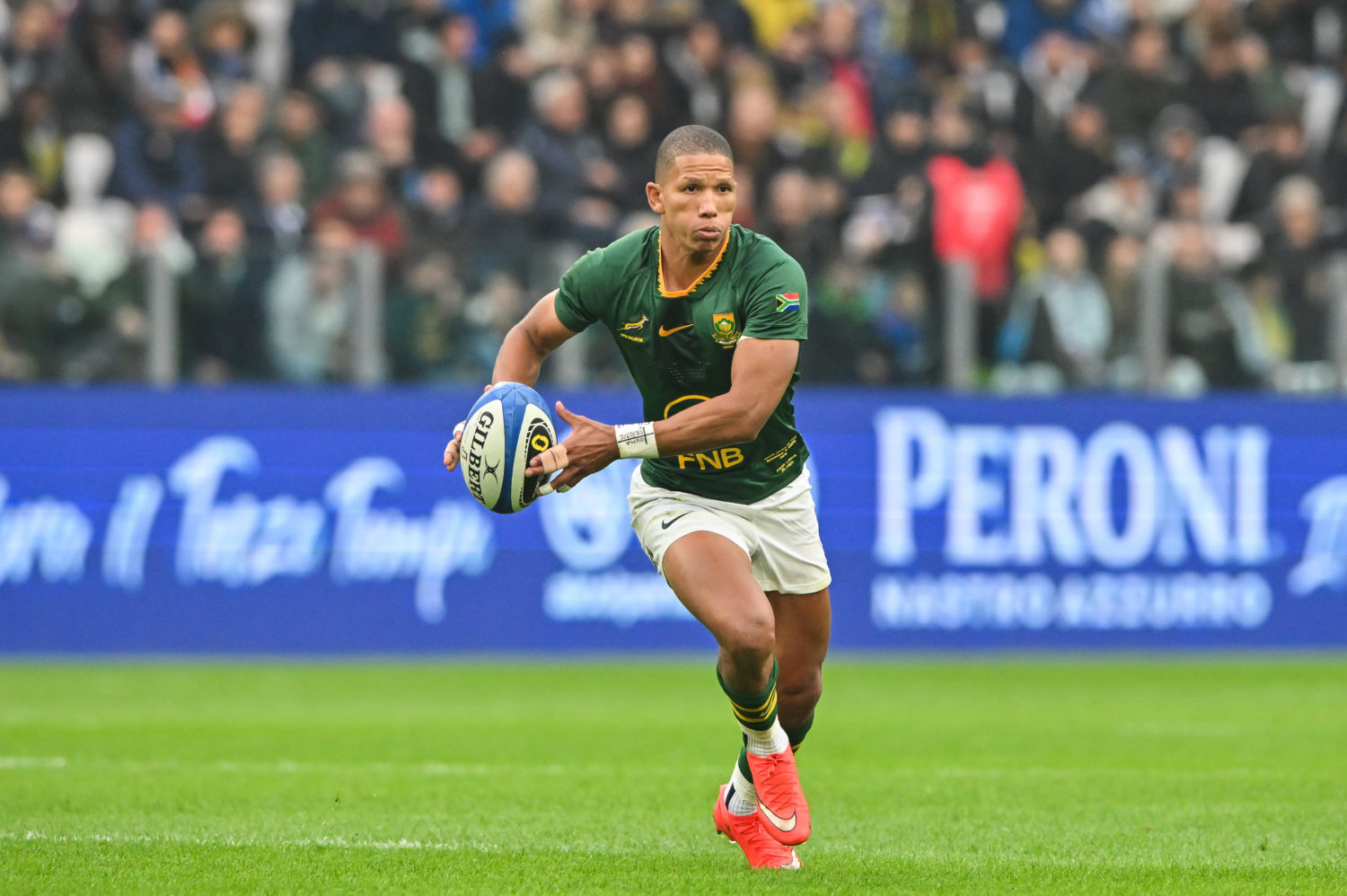
The difference between a talented flyhalf and a world-class one often has nothing to do with skill. It's what happens inside the head after a mistake. According to Chean Roux, who coached Manie Libbok during his Junior Bok days, that is precisely the shift that has transformed the Springbok No. 10 into one of rugby's elite playmakers.
Mental Maturity Sets Elite Flyhalf Apart
Roux is unequivocal in his assessment. Libbok has learned to park errors and move forward. It sounds simple. At Test level, it is anything but. Early in his career, Libbok carried the weight of his mistakes into the next phase, the next sequence, the next decision. That mental compound interest is ruinous at the highest level of the game, and it stunted his development in a Springbok jersey longer than his raw ability warranted.
What Roux identified from the junior level was that the talent and tactical intelligence were always there. The missing ingredient was mental maturity — specifically, the capacity to reset instantly and trust the next decision completely. That capacity has arrived. Watch Libbok operate in a Bok jersey now and you see it clearly: commanding distribution, composure when the defensive line is rushing, and the decisive split-second read that separates playmakers from passengers.
Roux's Expertise Validates Libbok's Development
Roux's endorsement carries genuine authority. He has worked with some of South Africa's brightest young talent through the junior structures and understands the gap between promise and delivery better than most. His read is not that Libbok is riding form. His read is that Libbok has completed a maturation process and arrived permanently as a world-class operator.