
.png)
Formula 1 drivers are no longer losing time solely to rivals — they are losing it to computers. The 2026 power unit regulations have handed machine-learning algorithms enormous influence over energy deployment, and at Spa-Francorchamps that influence turned destructive.
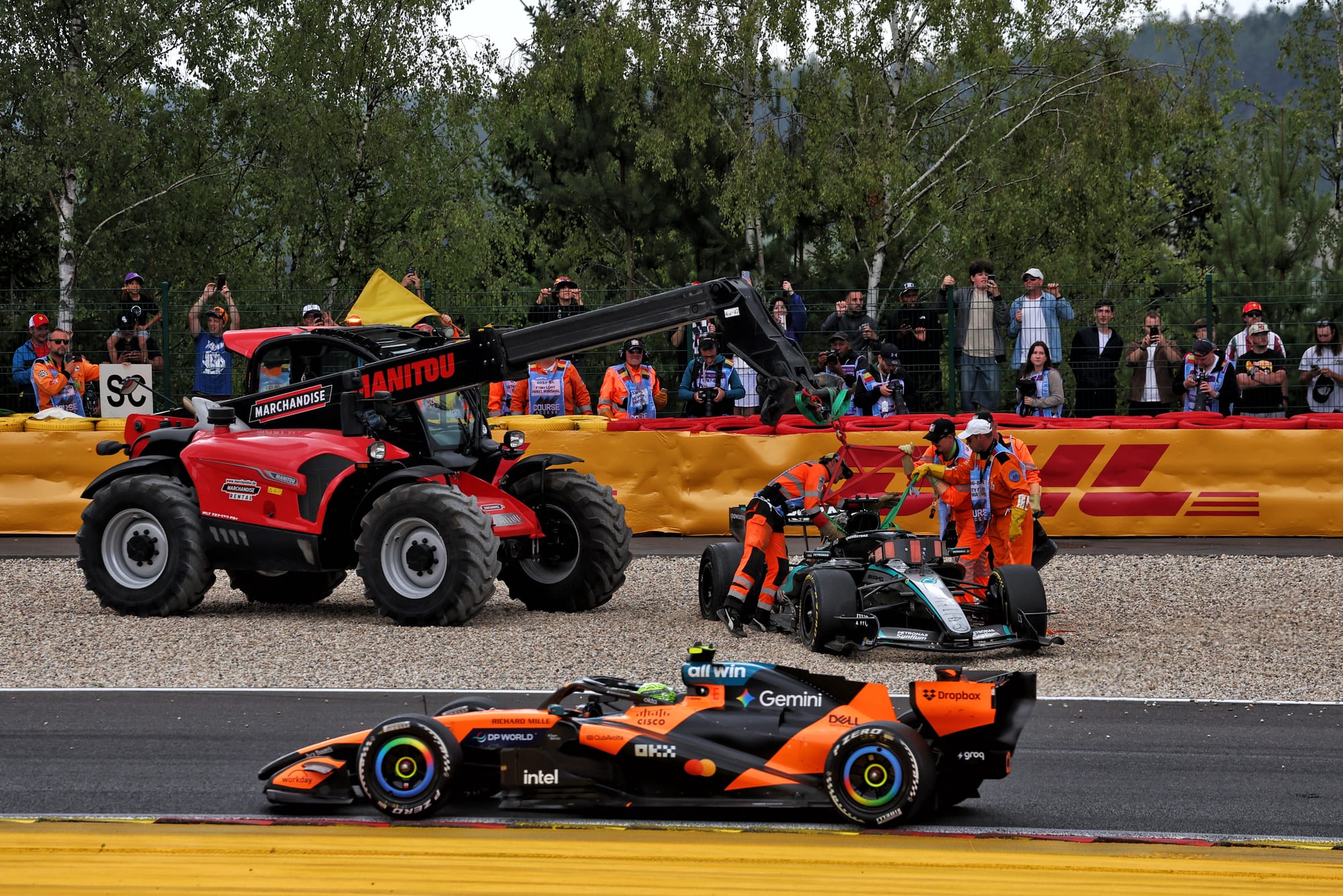
George Russell's Belgian Grand Prix weekend collapsed around a mysterious straightline speed deficit. Mercedes estimated a deployment problem into the Bus Stop chicane was costing him at least two tenths per lap to team-mate Kimi Antonelli, who leads the championship standings by 45 points over Lewis Hamilton. A separate deployment failure out of La Source — affecting all Mercedes-powered cars — was a direct contributor to Russell being swallowed up on the Kemmel Straight on lap one and the subsequent collision with Hamilton that ended his race.
McLaren's Lando Norris put it plainly. The issue, he said, is 'not down to the driver — it's just down to hoping you get lucky that the power unit does what it should do and doesn't do something silly.' He says it has been costing him the whole year. Team-mate Oscar Piastri suffered his own qualifying deficit at Spa — a confusing top-speed loss on the run to the final chicane traced back to the same class of algorithm problem. Piastri called the situation 'nuts' and confirmed other drivers have told him similar stories. 'When you've got qualifying decided by computers behaving or misbehaving,' he said, 'it's a pretty crap way of going racing.'
McLaren principal Andrea Stella described the power units as 'forward thinking', constantly adapting mid-lap to driver inputs that are never identical and cannot be fully simulated ahead of a weekend. Mercedes principal Toto Wolff admitted Russell's issue was only spotted at Spa partly by fortune — and that it could easily go undetected at an energy-richer venue. Some teams are reportedly switching the self-learning algorithms off entirely for qualifying to avoid these failures.